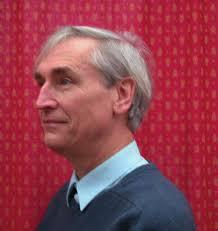
De Jonghe, Marcel
Biografie
Marcel De Jonghe grew up in a musical family and discovered his vocation for classical music at an early age. From 1955 onwards, he studied music theory and piano at the Municipal Music Academy of Anderlecht, where he was awarded government medals in piano, with highest distinction, and chamber music. After completing teacher training in Germanic languages, he continued his musical studies at the Royal Conservatoire of Brussels, earning first prizes in, among other subjects, harmony, counterpoint, fugue and composition. His most important teachers included Peter Cabus, Jean Louël and Victor Legley.
In 1972, De Jonghe became director of the Municipal Academy of Music, Dance and Spoken Word in Dilbeek, a position he held until his retirement in 2005. He also taught music writing at the Royal Conservatoire of Brussels. He began composing in 1977, and his oeuvre now comprises more than one hundred works, ranging from children’s songs and educational pieces to chamber music, orchestral works and concertos. His music often draws on a Neo-Romantic idiom in which tonality is expanded through contemporary techniques. De Jonghe describes his aesthetic as postmodern: a deliberate synthesis of tradition and modernity, with communication and emotional expressiveness as its central aims.