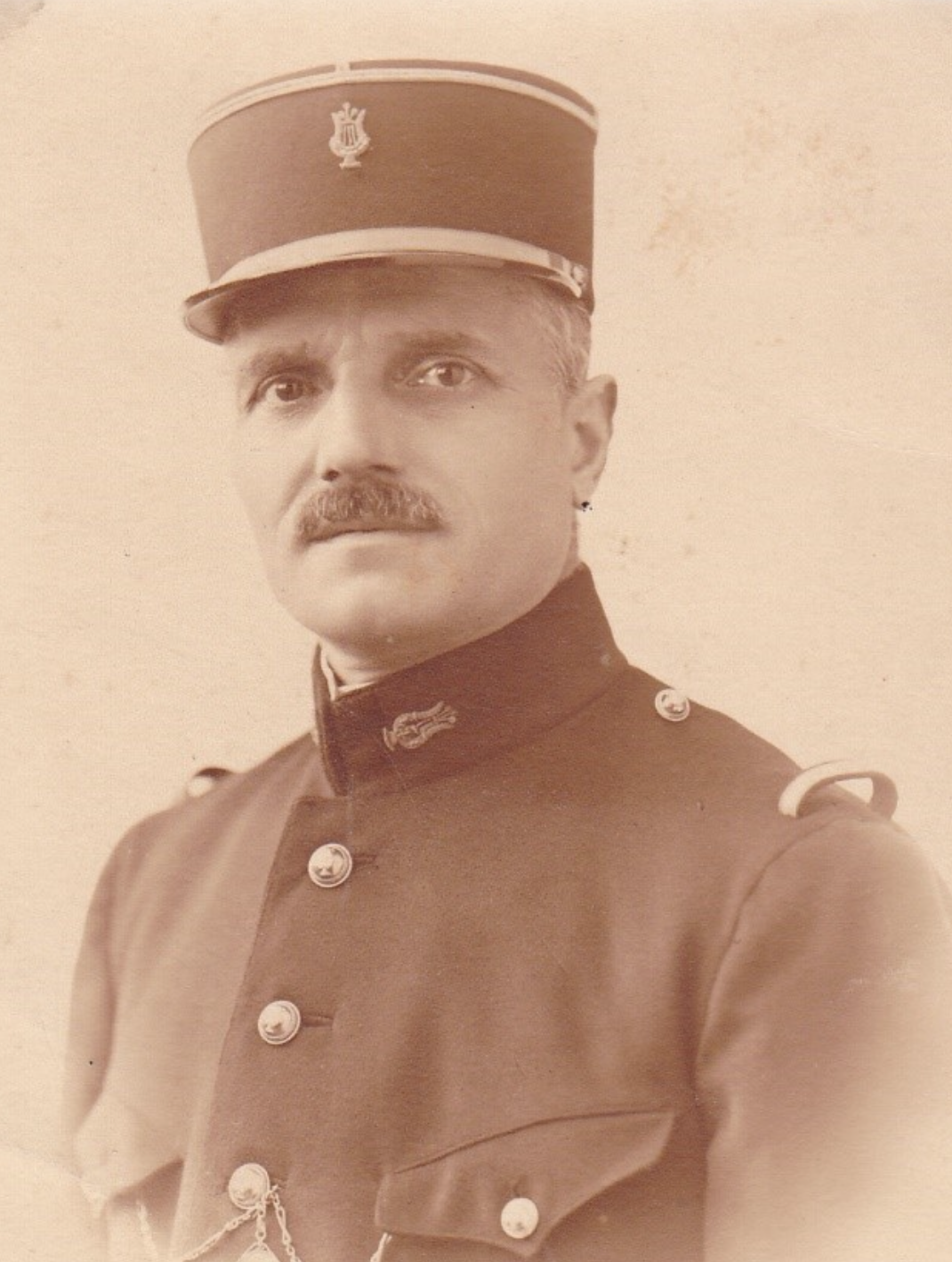
Deroo, Henri Georges (Geo)
Biografie
Hendrik Vanden Abeele (Text and translation)
Henri Georges Deroo, better known as Geo Deroo, was a Flemish musician, music teacher, conductor and composer who played an active role in amateur musical life in and around Ghent. From an early age, music occupied a central place in his life. During his military career, which began in 1903 when he enlisted as a volunteer soldier in the Belgian army, he further developed as a musician. He served, among other roles, as a clarinettist in the 2nd Regiment of the Line. During the First World War he spent fifty-four months at the front, where musicians, in addition to their musical duties, were also deployed as stretcher-bearers. For his service he received several decorations, including the War Cross and the Yser Medal. In 1924, after twenty years of military service, he retired from the army.
Shortly afterwards he began a long career as a music teacher and conductor of several wind bands. A tangible reminder of that period is an ebony conductor’s baton that his pupils presented to him on 20 December 1924, bearing on a silver plaque the inscription ‘offered by his grateful pupils’. Among the ensembles he conducted were the Koninklijke Harmonie Nijverheid en Wetenschappen (Ghent), the Koninklijke Harmonie der Belgische Oud-Strijders, the Koninklijke Harmonie St Cecilia en Verenigde Vrienden (Eeklo), Les Bons Vivants (Wetteren), Sint-Cecilia (Herzele) and the Koninklijke Harmonie Voor God en Vaderland (Bottelare). In 1932 he also founded the cultural society “Geo Deroo’s Vrienden”.
Deroo composed several marches for wind band, including the Scheldegalm March, Daniël Quinet March (also known as the Kinet March), Triomf March and Verbroederings March. According to family recollections, he frequently rehearsed Mozart’s Clarinet Concerto, with his daughter playing the piano part, as preparation for performances at the Vlaamse Schouwburg. Many of his scores were probably lost; after his death part of the family archive was destroyed. Nevertheless, surviving fragments, newspaper clippings and other archival materials still bear witness to a life in which music formed a lasting thread.
With thanks to Bart Scheirsen.